Mindfulness4dogs

The Mindfulness4dogs community

Community 7 posts this month

Force-free training, real dogs, and people going through the same thing. Read along for free; join in with a free account.

Join free

A free account gets you into the community. No card needed.

  • Free online courses: Puppy Parent Survival, Rescue Dog Survival and Muzzle Training
  • Read and join the conversation
  • Follow your dog’s progress
  • Free training articles and the blog
Create your free account

🐾 What is your PAWS profile?

A five-minute profile of the relationship between you and your dog — how attuned you are to each other, and what actually helps the two of you. Free, puppy or adult dog, and it starts your dog’s profile here.

What's on

Nothing scheduled just now — upcoming workshops and webinars will appear here.

Latest from the community

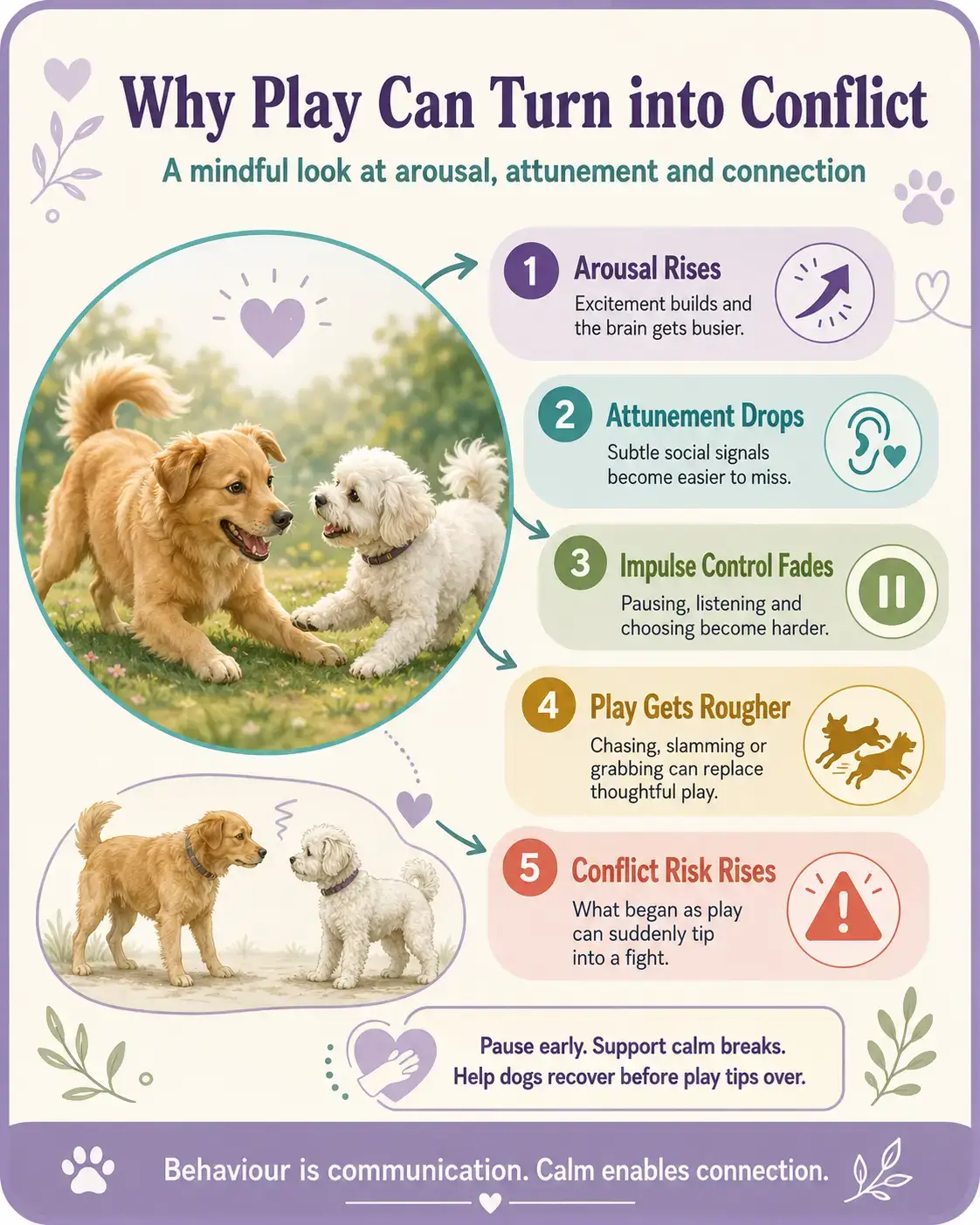
Why play can turn into conflict

Why does lovely dog play sometimes suddenly turn into a fight? It can feel as though it comes from nowhere. Two dogs are bouncing around, chasing each other and apparently having a wonderful time… then suddenly there’s a growl, snap… Show more

Why does lovely dog play sometimes suddenly turn into a fight?

It can feel as though it comes from nowhere.

Two dogs are bouncing around, chasing each other and apparently having a wonderful time… then suddenly there’s a growl, snap or scuffle.

But often, it hasn’t really come from nowhere.

As play continues, arousal can gradually rise. And as the emotional intensity goes up, the dogs can become less able to notice and respond to each other’s subtle communication.

You might start to see the play change.

The lovely loose, bouncy movements become faster and more intense. One dog may begin doing more of the chasing while the other does more of the escaping. There may be more body slamming, grabbing, pinning or relentless pursuit. Play bows and natural pauses become less frequent.

You may notice one dog trying to disengage — turning their head away, moving behind a person, sniffing the ground, slowing down or attempting to leave — only for the other dog to immediately restart the interaction.

And sometimes there’s a particularly important little moment:

The dogs stop.

Bodies become still. Mouths close. Faces become more tense. Eye contact lasts a little longer.

That tiny pause can be the point where playful communication is beginning to change.

From a mindful perspective, this is where attunement becomes so important.

Rather than waiting until somebody growls or snaps, notice how the quality of the interaction is changing.

Ask yourself:

Are both dogs still choosing the game?
Are they taking turns?
Are there natural pauses?
Can either dog walk away?
And after a pause, do both dogs genuinely choose to return?

Good play often contains a beautiful rhythm of connection → excitement → pause → reconnection.

When the pauses disappear, arousal keeps climbing and one dog stops listening to the other, that rhythm begins to break down.

That’s when we can gently intervene — call the dogs apart, give them some space, let them sniff, drink, breathe and allow their nervous systems to settle.

Not because the dogs have done anything wrong.

But because sometimes the best way to protect good play…

is to stop it while it’s still good. 💜🐾

Behaviour is communication. Calm enables connection.

#Mindfulness4dogs #DogPlay #DogBehaviour #CanineCommunication #EmotionalRegulation #AttunedDog #ConnectedDog #DogBodyLanguage #ConnectionOverCorrection

Show less

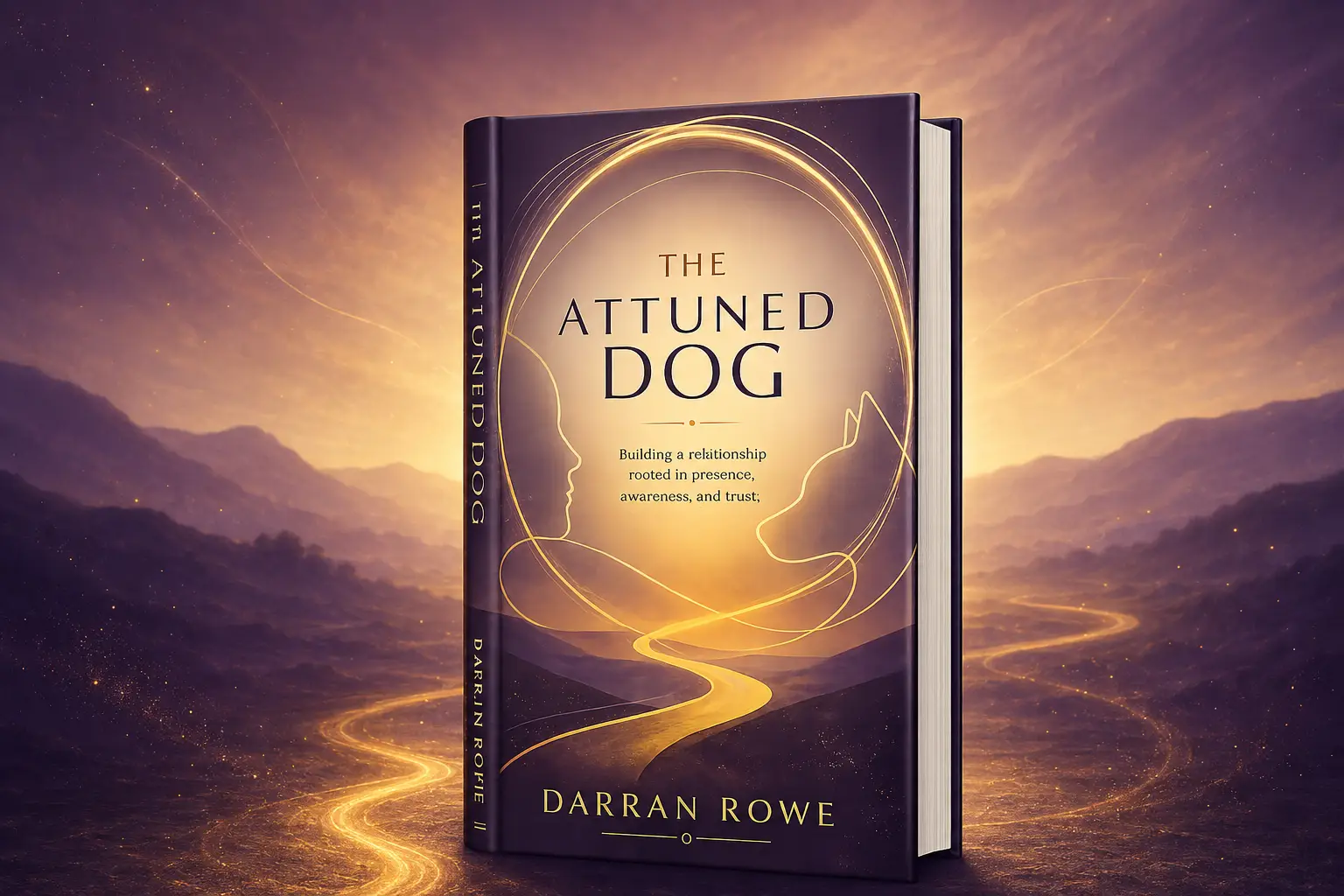
The Attuned Dog : Building a relationship rooted in presence, awareness and trust.

Your dog isn’t difficult. They’re unheard. Picture a dog standing in a training paddock, trying to disappear behind their person’s legs. They’ve been called difficult. Stubborn. Perhaps even wired wrong. Their person has tried training, advice, corrections and consistency, but… Show more

Your dog isn’t difficult. They’re unheard.

Picture a dog standing in a training paddock, trying to disappear behind their person’s legs. They’ve been called difficult. Stubborn. Perhaps even wired wrong. Their person has tried training, advice, corrections and consistency, but nothing seems to work.

Then somebody stops asking, How do we make this dog behave? and asks a different question.

What is this dog trying to tell us?

That question sits at the heart of The Attuned Dog. – https://theattuneddog.com/

Drawing on more than twenty years of working with dogs and the people who love them, canine behaviourist Darran Rowe explores what sits underneath training: emotion, learning, communication, safety, relationship and the quiet signals dogs have been giving us all along.

This isn’t a book about getting more control over your dog. It’s about becoming better at understanding them.

Inside, you’ll discover:

  • how your dog experiences the world through scent, sight and sound — and why behaviour often makes more sense when you see the world from their perspective
  • how to read the subtle body language that comes before the bark, growl, lunge or shutdown
  • how learning history quietly shapes the behaviours you see today
  • recall, loose-lead walking and everyday training built as a shared vocabulary rather than a battle for obedience
  • what may sit underneath reactivity, anxiety and barking — and why understanding the emotion matters before trying to change the behaviour
  • how your posture, movement, breathing, tension, attention and emotional state can become part of the information your dog is reading
  • practical Connection exercises throughout the book, small enough to begin today

You won’t find dominance theory here. You won’t find shock collars, prong collars or advice to punish fear out of a dog. The approach is grounded in positive reinforcement, emotional safety, choice and the growing evidence that training based on fear and pain can work against the trust we are trying to build.

What you will find are stories.

Some come from Darran’s own dogs: Suzy, who had never known life inside a home; Lemon, whose fear after a dog attack changed the direction of Darran’s career; Bruce, who gave him a reason to get up and walk when he needed one most; and Stella, whose communication became clearer once somebody stopped seeing her behaviour as a verdict on who she was.

Others are anonymised or composite learning stories drawn from more than two decades of professional practice. Different dogs, different families, but a remarkably consistent lesson:

behaviour makes more sense when we learn to listen before we try to correct it.

The Attuned Dog is written for the everyday person who loves their dog deeply and suspects there is more happening beneath the behaviour they can see. You don’t need a training background. You only need curiosity, patience and a willingness to look again.

Because your dog has been communicating with you all along.

The question is whether anyone is listening.

Darran Rowe is a canine behaviourist and founder of Mindfulness4Dogs in New Zealand. Born in Oxford, he worked with dogs in the UK before bringing his relationship-centred approach to canine training and behaviour to New Zealand.

Purchase at – https://theattuneddog.com/

Show less

Darran the Dogman

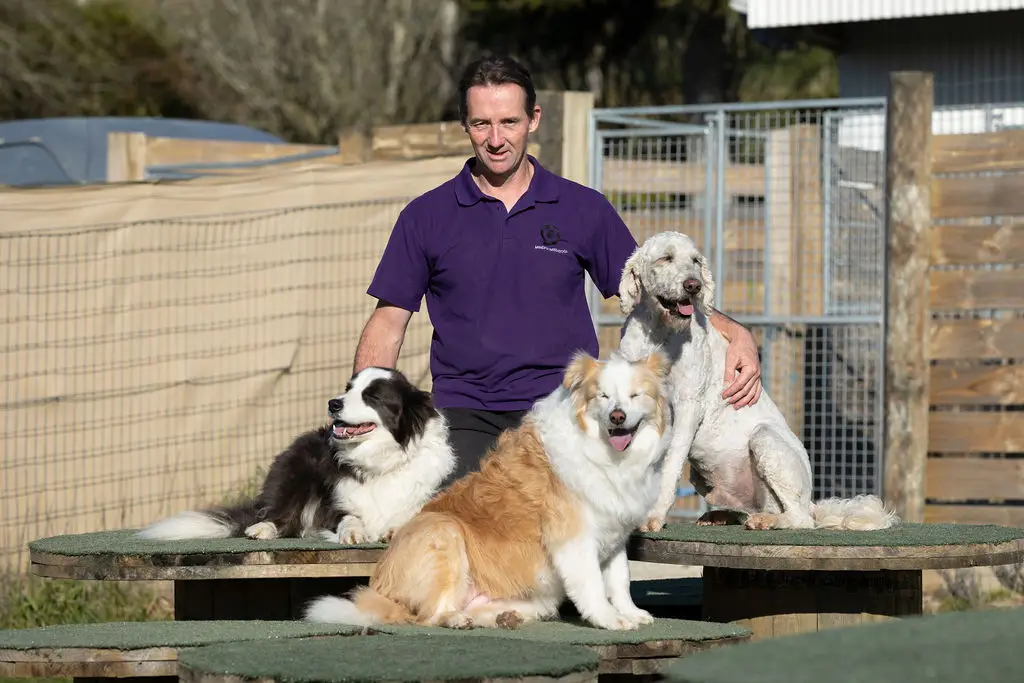
Hi I’m Darran Rowe – Darran the Dogman, Postgraduate qualified Canine Behaviourist. Qualifications : Completing Masters Degree in Clinical Animal Behaviour (CAB) at The University of Edinburgh, Royal (Dicks) Veterinary College, UK. Postgraduate Certifcate in Education, LSBU: London South Bank… Show more

Hi I’m Darran Rowe – Darran the Dogman, Postgraduate qualified Canine Behaviourist.

Qualifications : Completing Masters Degree in Clinical Animal Behaviour (CAB) at The University of Edinburgh, Royal (Dicks) Veterinary College, UK.

Postgraduate Certifcate in Education, LSBU: London South Bank University, UK.

Bachelor of Science 2.1(Hons) Degree in Applied Biology from Cardiff University, UK

Endorsements – Accredited Trainer – Companion Animals New Zealand, Endorsed Trainer – Association of Professional Dog Trainers New Zealand

Experience – Over 25 years training and behavioural experience, former SPCA manager.

Membership – Former President – Association of Professional Dog Trainers New Zealand.

Show less

Papia Rowe

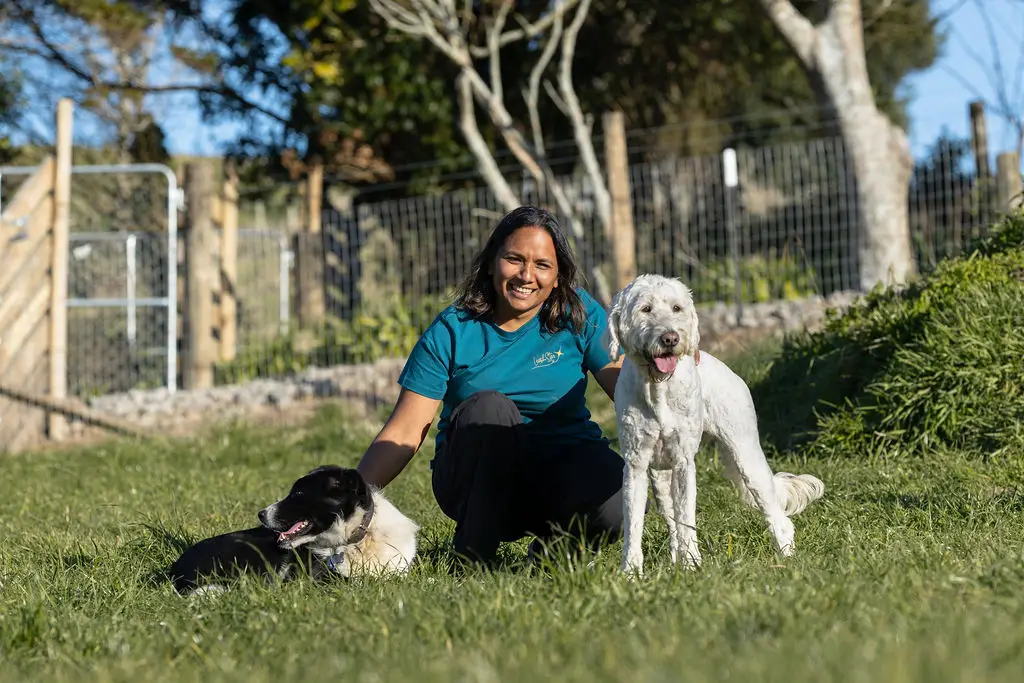
Hi I’m Papia Rowe – Professional Dog Trainer Qualifications : Karen Pryor Certified Professional Training Partner (KPA-CTP) – Internationally recognised qualification from the Karen Pryor Academy, USA. Postgraduate Certifcate in Education. University of Leicester. Postgraduate Diploma in Educational Leadership Faculty… Show more

Hi I’m Papia Rowe – Professional Dog Trainer

Qualifications : Karen Pryor Certified Professional Training Partner (KPA-CTP) – Internationally recognised qualification from the Karen Pryor Academy, USA. Postgraduate Certifcate in Education. University of Leicester. Postgraduate Diploma in Educational Leadership Faculty of Arts and Education, University of Auckland

Endorsements – Accredited Trainer – Companion Animals New Zealand , Endorsed Trainer – Association of Professional Dog Trainers New Zealand

Experience – Over 10 years training experience, former kennel manager of Hamilton Dog Control.

Membership – Former Secretary – Association of Professional Dog Trainers New Zealand

Show less

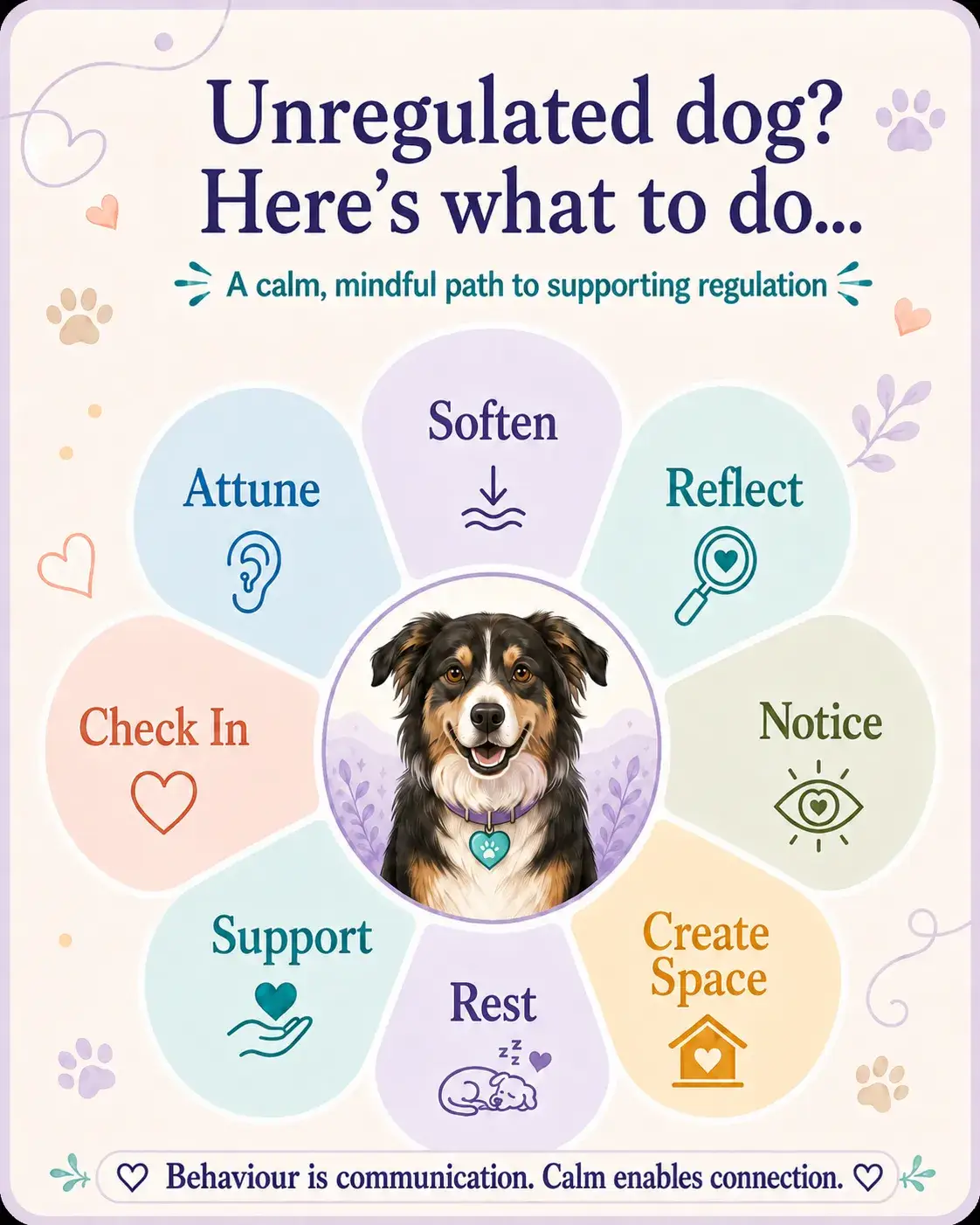
Unregulated adolescent dog — the regulation wheel

🐾 Unregulated adolescent dog? Here’s what to do… Adolescence can be a wonderfully messy stage of dog development. One minute you’ve got a thoughtful young dog who appears to have understood everything you’ve taught them. The next, they’ve spotted a… Show more

🐾 Unregulated adolescent dog? Here’s what to do…

Adolescence can be a wonderfully messy stage of dog development.

One minute you’ve got a thoughtful young dog who appears to have understood everything you’ve taught them. The next, they’ve spotted a leaf moving three gardens away and apparently forgotten you exist. 😅

But this is where I think we need to be careful with words like stubborn, naughty or defiant.

An adolescent dog is going through a significant period of neurological, hormonal and social development. Emotional regulation and impulse control are still maturing, while curiosity, exploration and sensitivity to what’s happening around them can be enormous.

So when a young dog becomes overwhelmed, overexcited, mouthy, barky, zoomy, unable to settle or seemingly unable to listen, my first question isn’t:

“How do we make them behave?”

It’s:

“What does this dog need right now to help them regulate?”

That’s what this flower wheel is about. 💜

• Soften – reduce the pressure. Fewer demands, fewer battles and sometimes simply a quieter day.
• Reflect – look at what’s been happening around the behaviour. Exercise, enrichment, excitement, visitors, walks, daycare… even good things can become too much.
• Notice – watch your dog rather than waiting for the explosion. How are they moving? Breathing? Looking? Can they disengage? Can they settle afterwards?
• Create Space – sometimes regulation needs distance. From another dog, the children, visitors, the window, or simply the constant activity of family life.
• Rest – sleep and genuine downtime matter enormously. An exhausted adolescent isn’t necessarily going to become calmer by doing another hour of exercise.
• Support – help their nervous system find its way back down. Sniffing, chewing, licking, quiet companionship, predictable routines and activities your individual dog finds soothing.
• Check In – behaviour is information. If something has suddenly changed or your dog is struggling unusually, consider discomfort, pain or health alongside behaviour.
• Attune – perhaps the most mindful part of all. Slow yourself down enough to actually listen to the dog in front of you.

And that last one matters.

Because regulation isn’t something we simply teach to a dog.

Very often, it’s something we help them experience.

Our pace, expectations, environment and emotional responses all become part of the picture. Sometimes the most useful thing we can offer an adolescent dog isn’t another command.

It’s a calmer nervous system standing beside them saying:

“I see you. You’re struggling. We’ll work this out together.”

💜 Behaviour is communication. Calm enables connection.

Show less

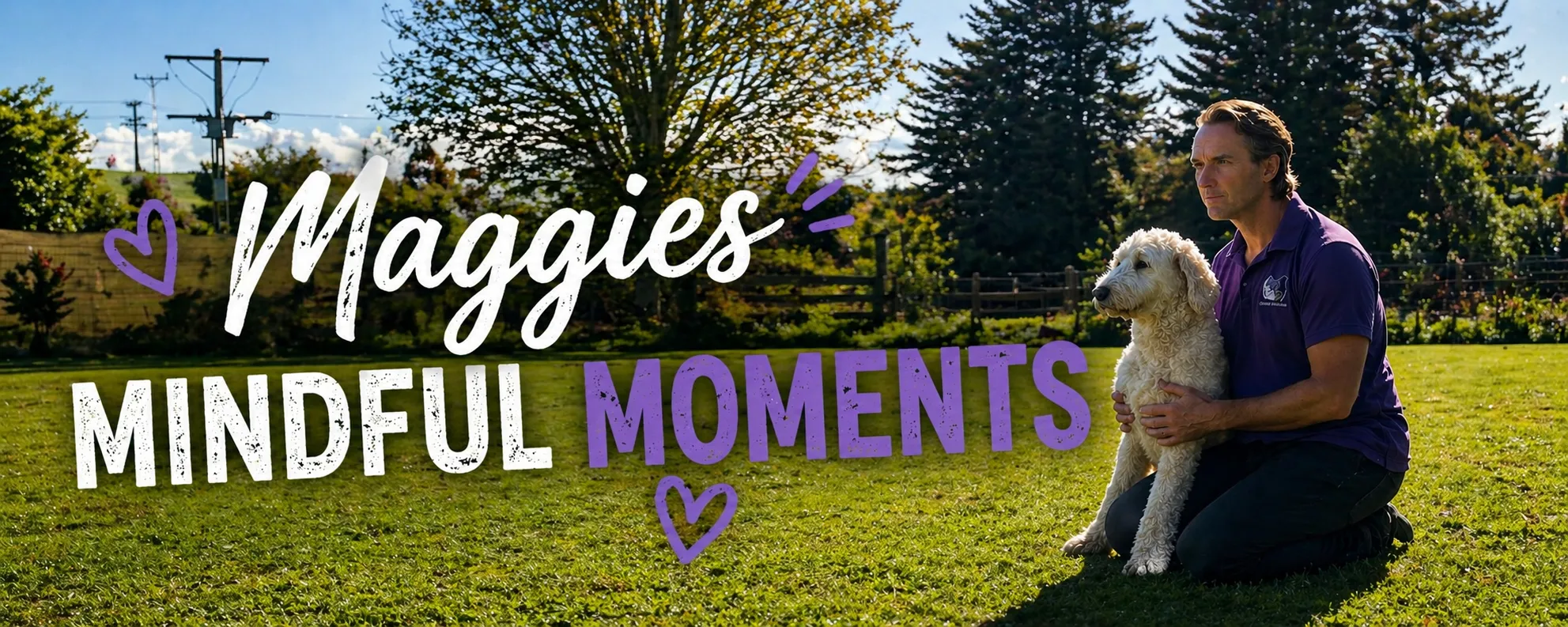
Maggies Mindful Moments — The Polite Hello

Can I tell you what happens to me on the footpath? Another dog comes along, and before either of us has said a single word, our two people have decided we’re going to be friends. The leads get short. We’re… Show more

Can I tell you what happens to me on the footpath?

Another dog comes along, and before either of us has said a single word, our two people have decided we’re going to be friends. The leads get short. We’re walked straight at each other, nose to nose, while they stand above us going “say hello! go on, say hello!”

Nobody asked us.

Here’s how I’d do it, if I were allowed. I’d walk a little curve rather than a straight line. I’d look away for a second — not because I’m rude, but because looking away is exactly how I say I mean no harm. Then I’d come alongside and have a polite sniff at the back end, which is where all the proper information is kept anyway. Four seconds. Maybe five. Then I’d move along, and we’d both feel grand about it.

Straight lines and staring faces are how dogs argue. They are not how we say hello. When you march us at each other, you’re asking us to open the conversation with the rudest sentence we know.

So next time? Let the leads go loose. Walk a curve. Give us three seconds, then call us away while it’s still going nicely.

Short and sweet is how friendships start.

Love, Maggie 🐾

Show less

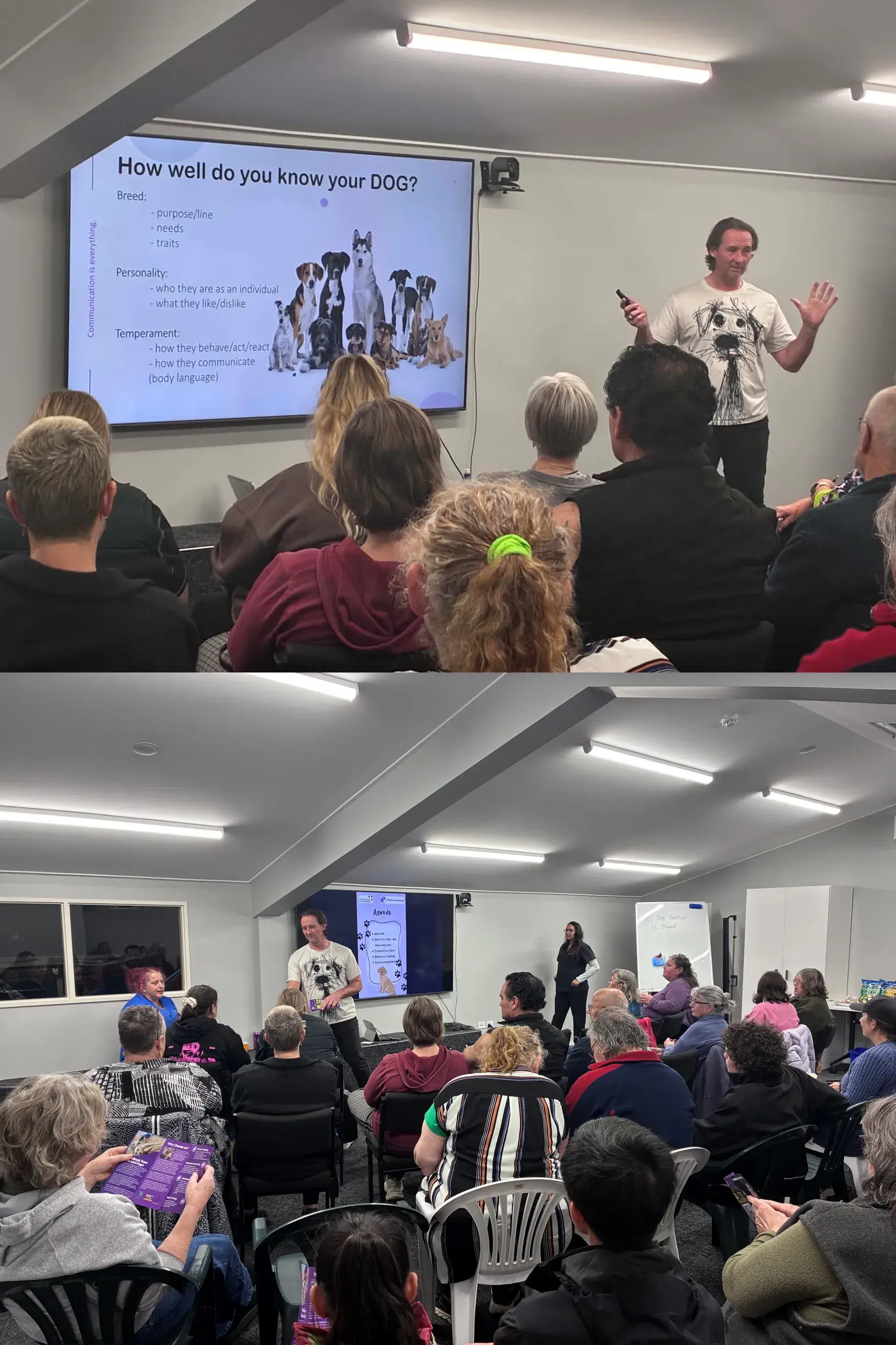
Seminar recap — Taranaki Vet Group, Hawera

Seminar recap — “How well do you know your DOG?” Last week we spent an evening with around 50 dog owners at the Taranaki Vet Group’s Hawera clinic, talking about the one thing that sits underneath almost every behaviour problem:… Show more

Seminar recap — “How well do you know your DOG?”

Last week we spent an evening with around 50 dog owners at the Taranaki Vet Group’s Hawera clinic, talking about the one thing that sits underneath almost every behaviour problem: communication.

We worked through three layers:

– Breed — the purpose and line your dog comes from, and the needs that come with it
– Personality — who they are as an individual, what they like and dislike
– Temperament — how they behave, how they react, and how they communicate through body language

Dogs are talking to us constantly. A turn of the head, a lick of the lips, a shift of weight, a held breath. The signals are always there — most of us were simply never taught to read them. Once you can, a lot of what gets labelled “naughty” turns out to be a dog quietly asking for help.

A big thank you to the team at Taranaki Vet Group in Hawera for organising the evening, and to everyone who came out on a cold night. The questions were excellent — and as the whiteboard reminded us, there is no such thing as a stupid dog question.

If your clinic, club or group would like an evening like this, get in touch.

Show less

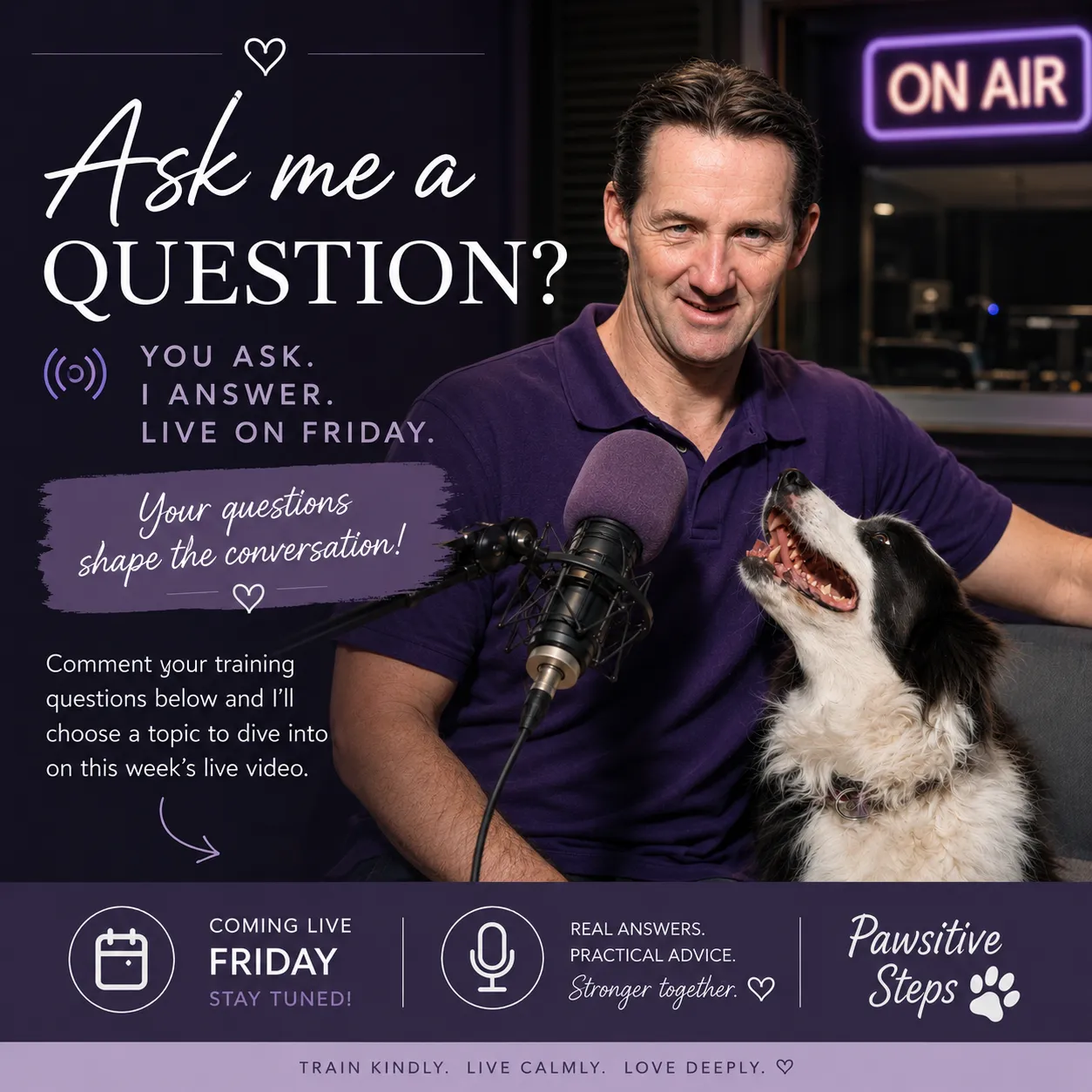
Get answers to your questions

🐾 Got a dog question that’s been nagging at you? This Friday at 7:00pm I’m going LIVE to answer YOUR questions — and there’s no such thing as one that’s too big, too small, or too “I really should know… Show more

🐾 Got a dog question that’s been nagging at you?

This Friday at 7:00pm I’m going LIVE to answer YOUR questions — and there’s no such thing as one that’s too big, too small, or too “I really should know this by now.” (You shouldn’t have to know it all. That’s my job, not yours.)

Maybe it’s the lead pulling. The barking at the window. The recall that works beautifully… right up until it actually matters. Or maybe it’s something you’ve been quietly worrying about and haven’t wanted to say out loud.

Here’s the thing — you don’t have to.
👉 Drop your question in the comments below, or send it in privately (and anonymously, if you’d prefer) here:

Ask a Question


I’ll work through as many as I can on Friday night, live. Grab a cuppa, bring the dog, and let’s figure it out together. 🐶
See you at 7.

Show less

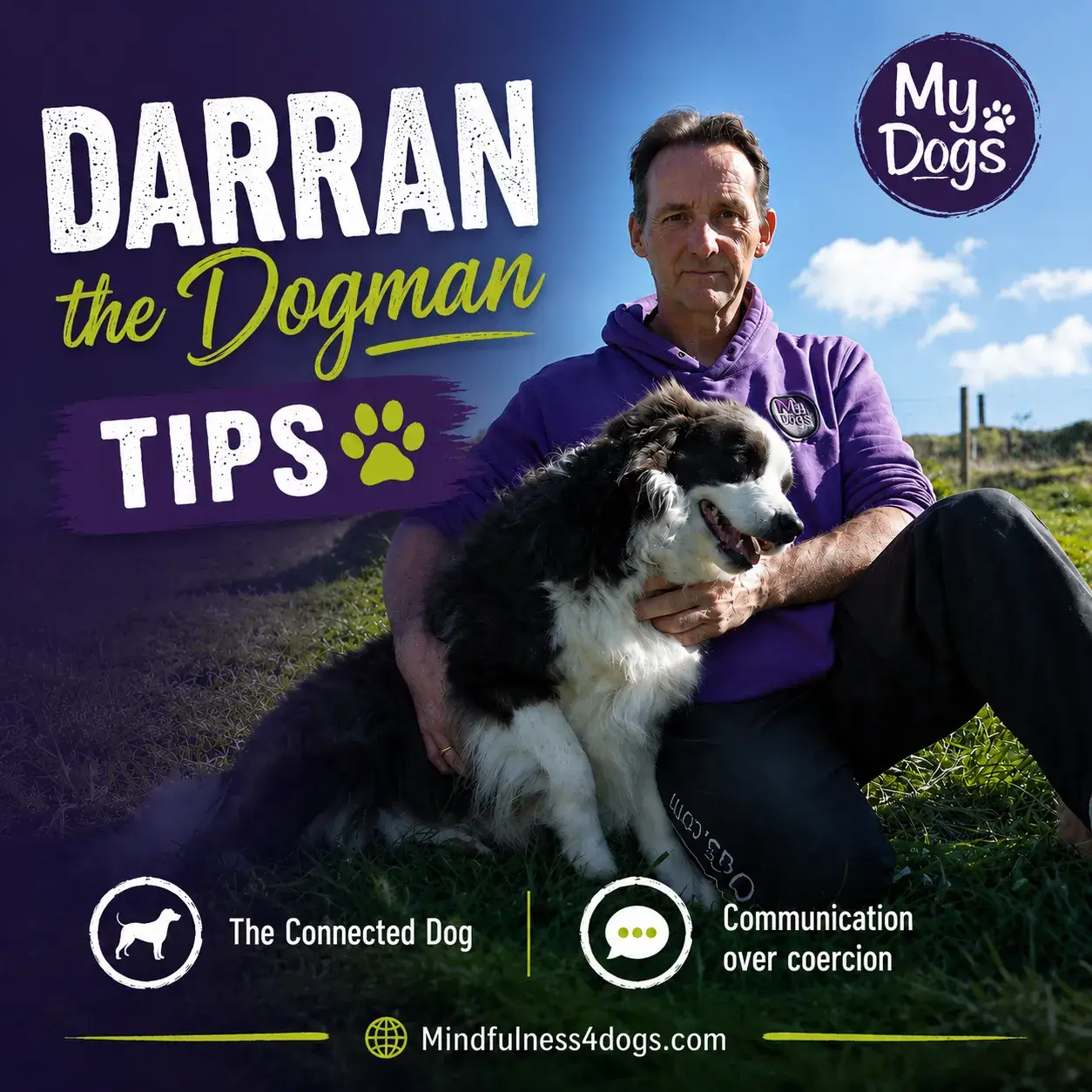
Darran the Dogmans Tips

A five-second test tells you whether your dog actually wants that cuddle. Pet your dog for about three seconds, then stop and take your hands away. Watch what they do. Lean back in, nudge your hand, shuffle closer? They’re asking… Show more

A five-second test tells you whether your dog actually wants that cuddle.

Pet your dog for about three seconds, then stop and take your hands away. Watch what they do. Lean back in, nudge your hand, shuffle closer? They’re asking for more, so carry on. Move off, look away, go still? They’ve told you they’re done, and the kind thing is to listen.

This matters more than it sounds. When you give your dog a say over being touched, they learn that being near you is safe and predictable. That trust is the foundation of the whole relationship, and it’s the thread running through The Invisible Lead: connection comes before control.

Try it today with your own dog and see what they tell you.

👉 Want access to more training tips and other online resources? They’re all waiting in my Online Learning Hub: https://mindfulness4dogs.com/online-learning-hub

Show less

Darran the Dogmans Tips

Want a faster recall? Stop ending the fun every time you call your dog. Most dogs learn that “come!” means the lead goes on, the sniffing stops and we go home. So they start ignoring it. Can you blame them?… Show more

Want a faster recall? Stop ending the fun every time you call your dog.

Most dogs learn that “come!” means the lead goes on, the sniffing stops and we go home. So they start ignoring it. Can you blame them?

There’s a simple rule from learning science: you can use something your dog loves to reward something you want. So call your dog, mark it with a “yes”, pop a treat in, then send them straight back. “Go sniff, off you go.” Coming to you now predicts more freedom, not less.
Practise it on every walk where it’s safe. Recall becomes the best deal going instead of the buzzkill.

👉 Want access to more training tips and other online resources? They’re all waiting in my Online Learning Hub: https://mindfulness4dogs.com/online-learning-hub

Show less

Darran the Dogmans Tips

Letting your dog sniff isn’t a waste of a walk. It is the walk. A dog reads the world through their nose the way we read it through our eyes. When you march them past every lamppost to hit your… Show more

Letting your dog sniff isn’t a waste of a walk. It is the walk.

A dog reads the world through their nose the way we read it through our eyes. When you march them past every lamppost to hit your step count, you switch off the richest part of their day. The research agrees: dogs given the freedom to use their nose become measurably more optimistic, and the sniffing itself brings their arousal down.

Try a “sniffari” this week. Pick a quiet route, drop the pace, let your dog lead with their nose. Long lead, loose lead, no rushing. Ten unhurried minutes of sniffing can tire them more than a brisk half hour of heel.

This is one of the small shifts at the heart of The Connected Dog.

👉 Want access to more training tips and other online resources? They’re all waiting in my Online Learning Hub: https://mindfulness4dogs.com/online-learning-hub

Show less

Darran the Dogmans Tip

Your dog jumps up because it works. Every time they launch at you and you push them off, talk to them, or knee them away, you hand over the thing they were after: your attention. Being touched and spoken to… Show more

Your dog jumps up because it works.

Every time they launch at you and you push them off, talk to them, or knee them away, you hand over the thing they were after: your attention. Being touched and spoken to is a win to a dog, even when you’re saying “no”.

Swap the timing. The moment four paws are on the floor, that’s when the hello, the treat and the eye contact arrive. Feet up, you go quiet and turn your shoulder. Feet down, the party starts. You reward the behaviour you want and the jumping fades.

Give every visitor the same rule and your dog picks it up fast.

👉 Want access to more training tips and other online resources? They’re all waiting in my Online Learning Hub: https://mindfulness4dogs.com/online-learning-hub

Show less

Want to join in? A free account lets you comment and join groups.

Join free Log in
Subscribe